Learning Outcomes:
i. Define the small intestine and explain its role in the digestive process.
ii. Describe the structure of the small intestine, including its three main regions: the duodenum, jejunum, and ileum.
iii. Explain the mechanical and chemical digestion of food in each region of the small intestine.
iv. Discuss the role of enzymes, bile, and pancreatic juice in breaking down various food components.
v. Analyze the significance of the small intestine in absorbing nutrients, vitamins, and minerals.
i. The Small Intestine: A Serpentine Pathway to Nutrient Absorption
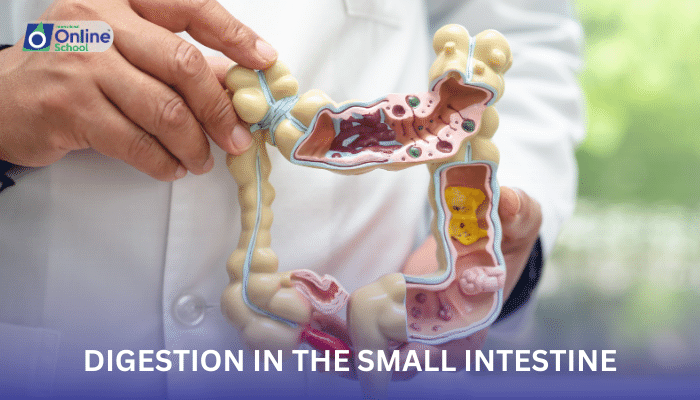
The small intestine, the longest and most complex part of the digestive system, is responsible for the majority of nutrient absorption. It is a narrow, elongated tube about 22 feet long, coiled and folded within the abdominal cavity.
ii. Structure and Segmentation: A Three-Part Journey
The small intestine is divided into three main regions:
Duodenum: The first and shortest segment, the duodenum receives partially digested food from the stomach, mixes it with digestive juices from the pancreas and liver, and continues the breakdown of carbohydrates, proteins, and fats.
Jejunum: The middle and longest segment, the jejunum is the primary site for nutrient absorption. It is lined with numerous finger-like projections called villi, which increase the surface area for absorption.
Ileum: The final and longest segment, the ileum absorbs the remaining nutrients and water, leaving behind undigested waste materials that are eventually eliminated as feces.
iii. Mechanical and Chemical Breakdown: A Symphony of Enzymes
The small intestine continues the mechanical and chemical breakdown of food initiated in the stomach:
Mechanical digestion: The smooth muscles of the small intestine contract rhythmically in a wave-like motion called peristalsis, mixing and propelling food along the digestive tract.
Chemical digestion: A variety of enzymes, secreted by the small intestine, pancreas, and liver, break down food into smaller molecules that can be absorbed:
Carbohydrates: Amylase, lactase, and sucrase break down starch, lactose, and sucrose into simple sugars, respectively.
Proteins: Proteases, including trypsin and chymotrypsin, break down proteins into amino acids.
Fats: Lipase breaks down fats into fatty acids and glycerol.
iv. The Role of Bile and Pancreatic Juice: Aiding Digestion and Absorption
Bile, produced by the liver and stored in the gallbladder, and pancreatic juice, secreted by the pancreas, play crucial roles in digestion and absorption:
Bile: Bile emulsifies fats, breaking them down into smaller droplets, making them more accessible to lipase for enzymatic breakdown.
Pancreatic juice: Pancreatic juice contains a variety of digestive enzymes, including amylase, trypsin, chymotrypsin, and lipase, which break down carbohydrates, proteins, and fats, respectively.
The Significance of the Small Intestine: A Nutrient Powerhouse
The small intestine is the primary site of nutrient absorption:
Nutrient absorption: The villi lining the jejunum and ileum increase the surface area for absorption, allowing nutrients to pass from the small intestine into the bloodstream.
Vitamin and mineral absorption: The small intestine also absorbs essential vitamins and minerals, such as vitamin B12, iron, and calcium.
The small intestine is a remarkable organ that plays a pivotal role in digestion and nutrient absorption. The intricate interplay of mechanical and chemical breakdown, facilitated by enzymes, bile, and pancreatic juice, ensures the efficient extraction of nutrients from food. The small intestine's ability to absorb a vast array of nutrients is essential for maintaining overall health and well-being. Understanding the physiology of the small intestine provides valuable insights into human nutrition and the importance of a healthy digestive system.
